
Amstrad CPC 464
Specs, Classic Games, History & Emulation Guide
What is the Amstrad CPC 464?
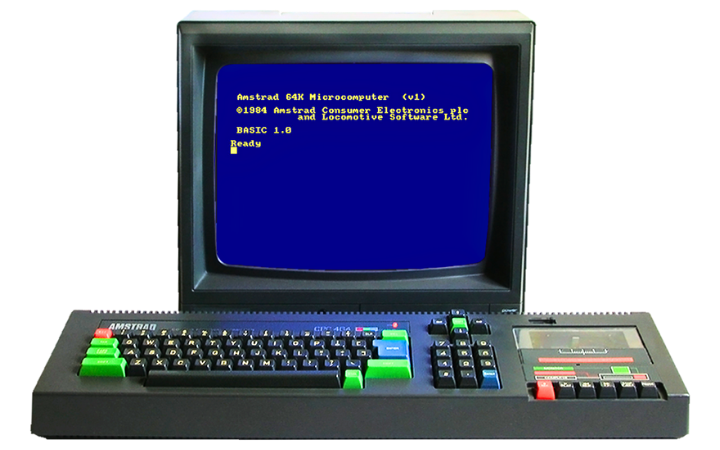
The Amstrad CPC 464, released in 1984, was one of the most popular home computers in the UK and across Europe. Designed to be affordable, easy to set up, and great for gaming, it quickly became a favourite among families, students, and hobbyist programmers.
The name CPC stood for Colour Personal Computer, and 464 referred to its 64 KB of RAM and built-in cassette tape drive.
Unlike many competing machines, the CPC 464 was sold as a complete, ready-to-use system, making it one of the easiest home computers to own in the 1980s.
Amstrad CPC 464 Specifications & Bundle
- Release year: 1984
- CPU: Zilog Z80A at 4 MHz
- RAM: 64 KB
- Storage: Built-in cassette tape deck
- Sound: 3-channel AY-3-8912 sound chip
- Built-in language: Locomotive BASIC
- Monitor options: Green monochrome or colour
- Graphics modes:
- Mode 0: 160×200, 16 colours
- Mode 1: 320×200, 4 colours
- Mode 2: 640×200, 2 colours

Amstrad Amsoft Pack (software over £100 value) - FREE with a purchase an Amstrad CPC464
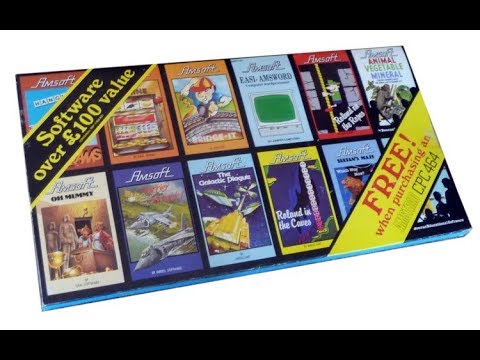
- Roland on the ropes
- Roland in the caves
- Timeman One
- Bridge-IT
- Oh Mummy
- Harrier Attack
- The Galactic Plague
- Xanagrams
- Fruit Machine
- Animal - Vegetable - Mineral
- Sultan's Maze
- Easy - Amsword
Why the CPC 464 was so popular?

All-in-one simplicity
The CPC 464 was designed to be easy for anyone to use:
- Computer and keyboard in one unit
- Built-in cassette drive for loading games
- Dedicated monitor included in the box
This meant:
- Fewer cables
- Simple setup
- Reliable performance compared to some rivals
Many families bought a CPC because it was plug-and-play computing in an era when computers could be complicated.
Graphics and sound capabilities
The CPC 464 stood out for its colourful graphics and strong sound hardware.
Graphics
- Up to 16 colours on screen
- Multiple display modes for games or productivity
- Bright, arcade-style visuals
Sound
- Dedicated 3-channel sound chip
- Better music and effects than many competitors
- Popular with game developers
These features helped the CPC become known as a serious gaming machine.
Classic Amstrad CPC 464 games
The CPC hosted hundreds of memorable titles, including:
- Platform games
- Arcade conversions
- Racing games
- Puzzle and strategy titles
- Adventure games
Many well-known European studios released games on the CPC, making it one of the core platforms of 1980s gaming, alongside the ZX Spectrum and Commodore 64.

Learning to program on the CPC
One of the CPC 464’s strengths was its built-in Locomotive BASIC.
When you turned the computer on, it booted straight into a programming prompt, encouraging experimentation.
Users could:
- Write simple games
- Draw graphics
- Create music
- Build educational programs
10 MODE 1
20 PRINT "HELLO FROM THE AMSTRAD CPC!"
30 GOTO 20
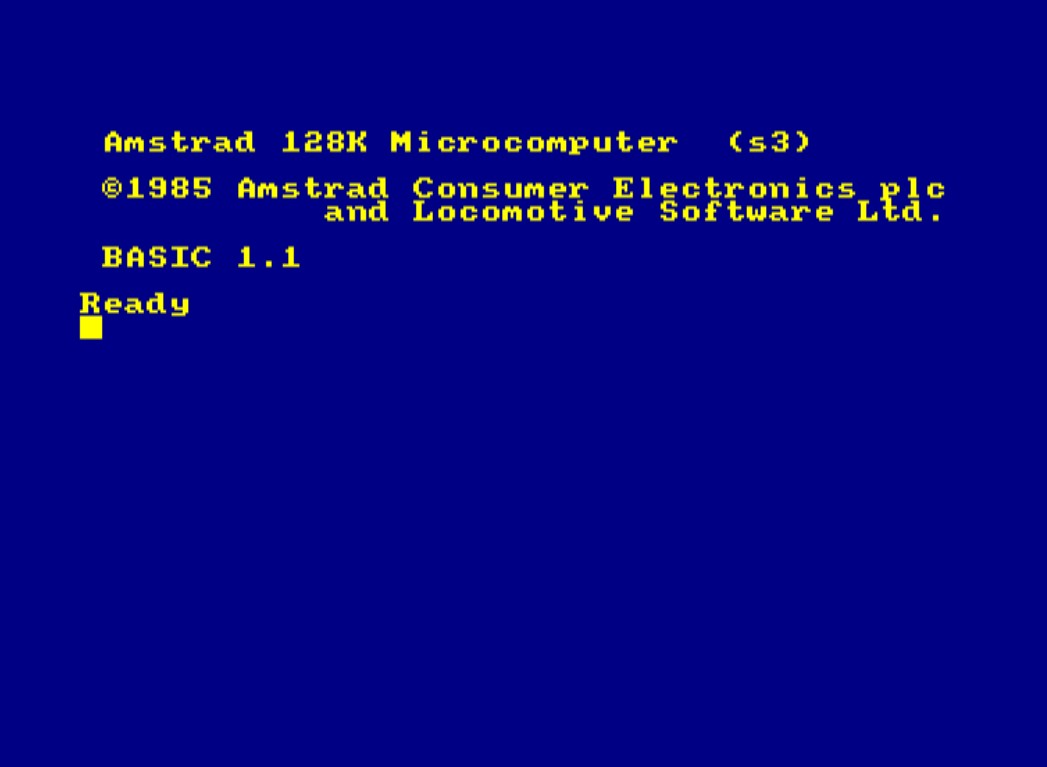
CPC464 EMULATOR (retrogamecoders)
< Try me >
For many people, the CPC 464 was the computer where they wrote their first program.
The CPC family
The CPC 464 was the first major model in the series.
MODEL
YEAR
KEY FEATURES
CPC 464
CPC 464
CPC 6128
1984
1984
1985
64KB RAM, cassette drive
Build-in floppy disk drive
128 KB RAM, CP/M support
The CPC 6128 later became the most powerful and popular version.
Using the Amstrad CPC 464 today
Original hardware
Collectors still use real CPC machines. Common checks include:
- Power supply stability
- Cassette drive operation
- Keyboard condition
- Video output quality
Buying guide: what to look for
If you’re buying a CPC 464, check:
- Clean video output
- Working cassette drive
- Responsive keyboard
- No severe case damage
- Original monitor condition
A tested or refurbished unit is usually the safest choice.
Legacy of the CPC 464
The Amstrad CPC 464:
- Sold millions of units across Europe.
- Made home computing more accessible.
- Became a major platform for 1980s games.
- Introduced countless users to programming.
Today, it remains one of the most loved retro computers among collectors and enthusiasts.
Amstrad CPC 464 FAQ
What does PCW stand for?
PCW stands for Personal Computer Wordprocessor, reflecting its main purpose.
Was the CPC464 good for games?
Yes. It was one of the main gaming platforms of the 1980s, with strong graphics and sound.
What language did it use?
It used Locomotive BASIC, built into the system.
Can you still use a CPC464 today?
Yes. You can restore original hardware or use an emulator on modern systems.
Explore more retro computers If you enjoyed learning about this system, you might also like:
- Apple Macintosh Classic II
- Atari 2600 Woody
- Amstrad CPC464
- Amstrad PCW8256
- BBC Model B
- Commmodore Vic 20
- Commodore 16
- Commodore Plus/4
- Commodore 64
- Commodore Amiga 500+
- Commodore Amiga 2000
- Commodore Amiga 1200
- Texas Instruments - TI994a
- ZX Spectrum 48k
- ZX Spectrum 128k