Commodore 64 Ultimate
'Breadbin'
Commodore 64 Ultimate:
Beige ( 2025 )
Your childhood just leveled up.
The C64 changed the world in 1982 at a launch price of $595 -(equivalent to roughly $2,000 in today's money).
The legacy is back with a machine that does much more for much less. Powered by FPGA hardware rather than software emulation, this is a faithful, high-performance recreation of the original motherboard - and then some. The soul of 1982, engineered for 2026.
- Play 10,000+ original games with more RAM & 48Mhz Turbo mode!
- Plug in dusty old cartridges, CRT TVs, datasettes, or disk drives - it all works.
- No disk drive needed: Load games using the File Browser from the supplied cassette-style USB thumbdrive, now packed with 100+ titles - full games, licensed classics, music, demos, and Commodore's exclusive new sequel to our first ever game - Jupiter Lander. Or add your own!
- Not just reborn but upgraded: More memory & faster speed options, multiple SID sound chips (add 2 original ones or use 8 x virtual SIDs!), keyboard macros, even modern printer support!**
- Enjoy HDMI clarity, Wi-Fi game transfer, USB convenience.
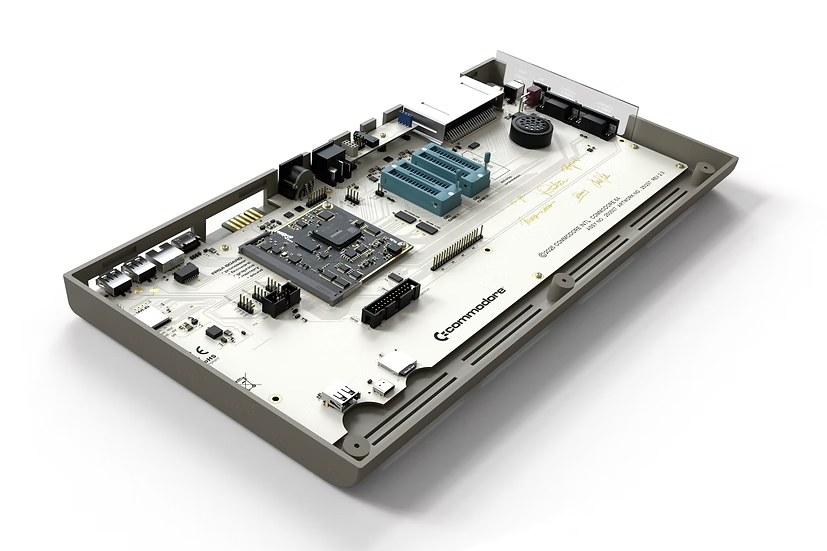
Hidden inside: the autographs/names of Commodore 64 creators past and present - including Albert 'Father of the Commodore 64' Charpentier - etched forever in the motherboard copper.*

What's in the box?
-
Commodore 64 Ultimate Computer
-
Spiral-bound User Guide
-
64MB USB Cassette Drive “The Very Second” with 50+ full games including licensed classics, plus music, and demos
-
Quick Start Guide
-
Stickers
-
HDMI Cable
-
Power Supply (12V, 100–240V with worldwide adapters)
-
All in the glossy original-style box

Retro Gaming / Modern Power
Storage
128MB USB Cassette with 100+ titles
Key Colors
Original Brown & Butterscotch
Lighting
Standard Power LED (red)
Motherboard
Full-size white PCB with Commodore 64 creator names & autographs etched forever in copper
Core
AMD Xilinx Artix-7 FPGA
Memory
128MB DDR2 RAM (16 MB system, 16 MB REU, 16 MB GeoRAM, remaining MB RAM Disk)
Flash
16MB NOR flash
HDMI
1080p @ 50Hz (PAL) or 60Hz (NTSC) HDMI-certified, DVI-compatible
Analog
8-pin DIN (CVBS, S-Video, or RGB)
Latency
Virtually zero-lag
SID Chips
2 x SID sockets (6581/8580) with auto voltage and filter detection
FPGA Audio
8 SIDs in FPGA for 24-channel playback
Speaker
On-board piezo speaker for disk sounds and more
Outputs
3.5mm headphone jack, Optical S/PDIF
Header
SID-TAP header
Keys
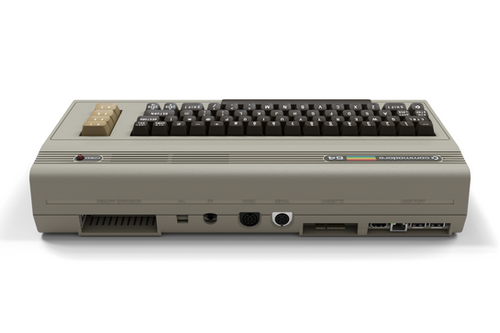
66-key mechanical, original Commodore 64 layout and shapes
Switches
Gateron Pro 3.0 55g (PTFE-free non-toxic lubed)
Features
N-Key Rollover (NKRO), Macros, Industry standard stabilizers
OS
Standard Commodore 64 or GEOS
USB Drives
FAT, FAT32, exFAT
File Formats
.D64, .D71, .D81, .G64, .T64, .TAP, .PRG, .ROM, ISO-9660, and more
Features
Integrated Ultimate-II+ functionality with tape emulation, DMA loader, print to PNG file, and more
USB
3 x USB-A 2.0, 1 x USB-C
microSD
Internal slot (card sold separately)
Network
Ethernet (100 Mbps), Wi-Fi (built-in), FTP, no social media, no browser, and much less
Power
12V DC, Multi-function switch (power, reset, menu, freeze)
Cartridge Port
>99.9% compatible
Datasette
6-pin edge connector
Disk Drive
6-pin IEC DIN
Joystick and Mouse
2 x DB-9 joystick / paddle ports and USB Mouse Support
User Port
26-pin internal (adapter sold separately)
C64 Ultimate FAQ
Is the C64 Ultimate a real Commodore 64?
The Commodore 64 Ultimate is a modern, officially licensed, FPGA-based re-creation of the original 1982 C64. It acts as a faithful, high-performance hardware replica (not software emulation) that runs original software, games, and supports classic peripherals, making it a "real" C64 in functionality and feel, while upgrading to HDMI, USB, and Wi-Fi.
Key Aspects of the C64 Ultimate:
FPGA Technology: Instead of a software emulator, it uses an FPGA to replicate the original motherboard, providing near 100% compatibility with original cartridges, tapes, and disks.
Modern Enhancements: Features built-in Ultimate-II+ functionality for loading games via USB/SD cards, HDMI output (1080P), Wi-Fi, Ethernet, and Turbo modes.
Physical Fidelity: The unit, available in Beige or special editions, looks and feels like the original "breadbin" model, including a mechanical keyboard, according to this IGN review.
What are the C64 Ultimate benefits for programmers and retro games developers?
One of the main reasons I bought the original ultimate board was because of the network capability. Being able to push the new code over to the machine via the LAN is so much nicer than disk swapping. This is even more convenient when you go beyond just telnet and FTP and look at the REST API.
For example, if your C64U has the IP address 192.168.0.64 you can load and run a program by POSTing to:
http://192.168.0.64/v1/runners:run_prg
There’s a lot of potential for games taking advantage of the greatly expanded abilities having 20,000+ C64 ultimates out there too.
Is it better than a real C64?
The C64U is objectively better unless your goal is 100% pure authenticity. Authentic experience does come at the price of frustrating upkeep of old electronics and lack of modern conveniences so I doubt it is for everyone. Retro hardware, have long argued, is a distinct but related hobby from retro gaming.
You can even use all your old peripherals, physical media, and add-ons if you want to. Nothing is lost in translation. The C64U plugs into a Commodore 1084S monitor for gorgeous blurry CRT visuals, as well as crisp, modern HDMI.
There are features that are more convenient on the C64U or even were doable but unlikely on original hardware. On the C64U you can use Jiffy DOS for faster disk loading, but you can switch back and forth with vanilla ROMS with a switch of a menu item. Another is the built-in modem is capable of speeds of up to 38400, whereas my C64 wifi modem tops out at something like 2400 at best.
The one area the original could theoretically beat the recreation is the audio from a real SID chip. This has been neatly solved for those who care, as the board has sockets for you to insert real 6581 or 8580 chips and have it replace the virtual ones.
Explore more retro computers If you enjoyed learning about this system, you might also like:
- Apple Macintosh Classic II
- Atari 2600 Woody
- Amstrad CPC464
- Amstrad PCW8256
- BBC Model B
- Commmodore Vic 20
- Commodore 16
- Commodore Plus/4
- Commodore 64
- Commodore Amiga 500+
- Commodore Amiga 2000
- Commodore Amiga 1200
- Texas Instruments - TI994a
- ZX Spectrum 48k
- ZX Spectrum 128k